
Repairs That Extend Deck Lifespan
Deck Repairs in Swanzey for structures showing signs of board rot, unstable railings, or failing connections before minor damage spreads
Deck deterioration often begins where water collects—between deck boards and joists, around post bases in contact with soil, or at ledger connections where flashing has failed. What starts as surface discoloration progresses to soft spots that compress underfoot, fasteners that pull free from weakened wood, and railings that shift when leaned against. Powers Contracting LLC evaluates deck condition throughout Swanzey, identifying areas where intervention prevents complete reconstruction while restoring safe function.
Repair work addresses specific failures rather than replacing the entire structure. Damaged decking boards get removed and replaced with matching material, while underlying joists are sistered or swapped if rot has compromised load capacity. Railing sections receive new posts anchored properly to framing, and stair stringers showing splits or sag are rebuilt to restore consistent tread height. Each repair considers why the original component failed and corrects the condition—improving drainage, adding blocking, or upgrading fasteners—so the same issue doesn't recur.
Request an inspection to identify problem areas and receive a repair plan before additional structural damage develops.
Our Services
How Deck Repairs Address Underlying Causes
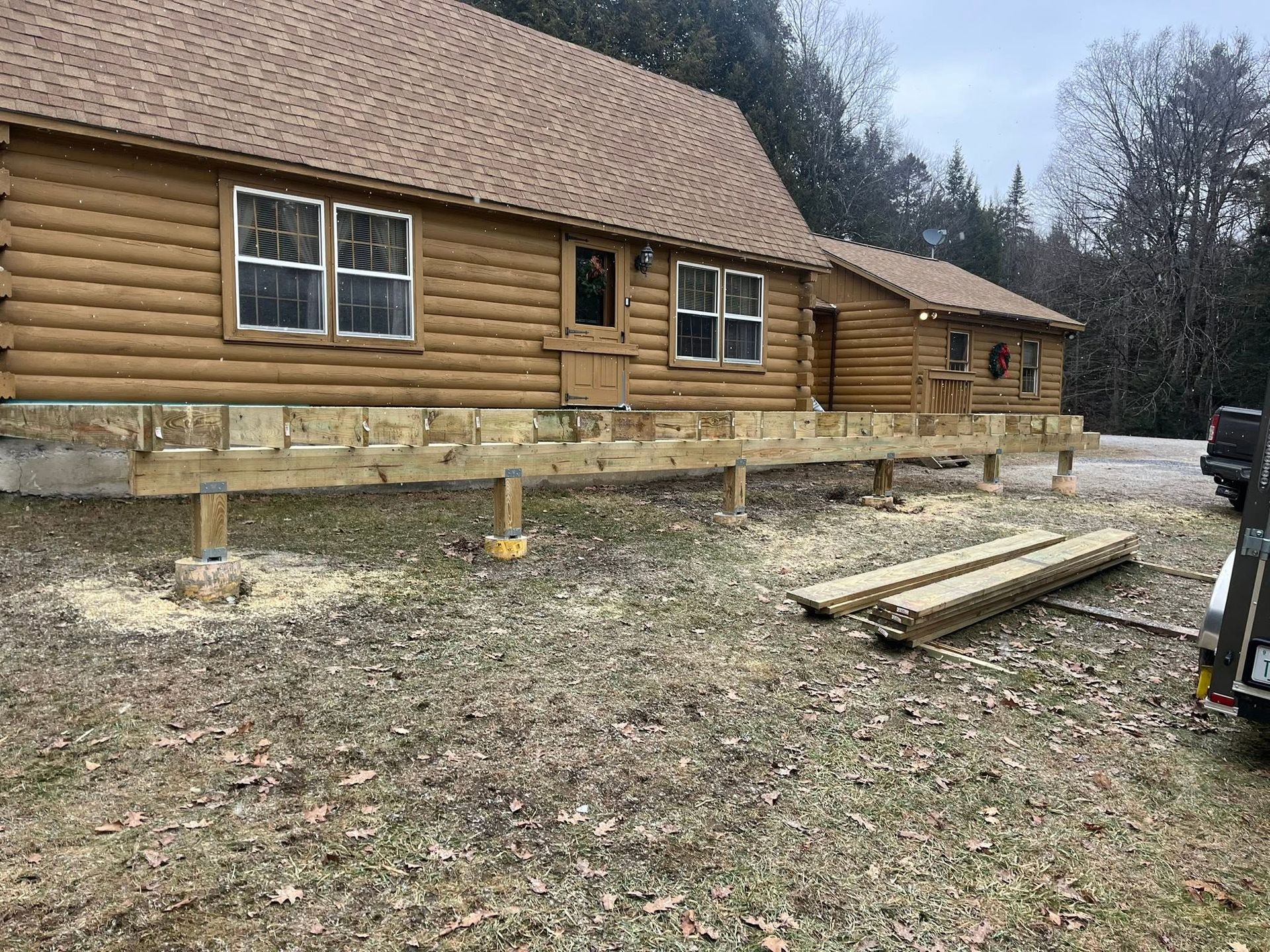
Effective repairs go beyond replacing visible damage to correct the conditions that caused failure. Gaps between boards that trap debris get adjusted during reinstallation, joist hangers showing rust get swapped for galvanized or stainless versions, and post bases previously sitting on bare soil receive concrete footings or standoffs that eliminate ground contact. Ledger boards pulling away from the house require removing siding to install proper flashing and through-bolts that penetrate into solid framing, not just sheathing.
Once repairs are complete, the deck surface feels solid without flexing or bouncing, railings no longer wobble when gripped, and stairs provide even footing without loose treads. Boards sit flush without protruding nails or screws, and the overall structure returns to safe use for furniture placement and regular traffic. Visual improvements follow function—replaced sections blend with surrounding material, and finishes can be applied uniformly once moisture content stabilizes.
Repairs also include reinforcing connections that meet current standards even if original construction predates those requirements.
This means adding blocking between joists to prevent twisting, increasing fastener count at critical joints, and verifying that guardrail height and baluster spacing meet code where children or guests will use the deck.
Common Questions About Deck Repair Services
Homeowners often need clarity on when repairs make sense versus full replacement, and what specific work involves.
What signs indicate a deck needs professional evaluation rather than just surface cleaning?
Soft spots when walking across boards, railings that move when pushed, visible gaps where the deck attaches to the house, rust stains below fasteners, or cracks running with the grain of structural members all require inspection beyond cosmetic maintenance.
How are damaged joists repaired without removing the entire deck surface?
If decay is localized, a new joist of equal size gets fastened alongside the damaged member, transferring load to the new wood. Deck boards are temporarily removed in that section, the repair is completed, and boards are reinstalled. Widespread joist rot typically means replacement makes more sense than piecemeal fixes.
When is it better to replace an old deck completely rather than invest in repairs?
Replacement becomes more practical when structural framing shows extensive rot, when the ledger connection has failed and requires rebuilding the attachment system, or when the cost of repairing multiple failing components approaches the cost of new construction. An inspection clarifies which approach fits your situation.
What materials are used to replace damaged deck boards and railings?
Replacement material matches the existing type when possible—if your deck uses pressure-treated lumber, repairs use the same. If original boards are no longer available, the closest match in dimension and species is selected. Composite repairs match the manufacturer and color line to maintain appearance.
How do deck repair projects proceed across Swanzey and surrounding areas with varying property access?
Work begins with removing damaged components, followed by framing repairs, then installation of new boards and railings. Material delivery and debris removal are scheduled based on driveway access and whether equipment can reach the work area without crossing finished landscaping.
Powers Contracting LLC completes thorough deck evaluations and provides repair recommendations based on current structural condition. Contact us to schedule an assessment and receive a detailed repair estimate tailored to your deck's specific issues.